Organization Design and Product Leadership: Real Change Under Pressure
Users may never see your org chart, but they feel it. Here's what Ørsted learned redesigning its digital organization under pressure.
With Aitor Gómez Matías, Senior Agile Transformation Lead, Ørsted
The message
Your organization is already designing your product. The question is whether you're designing it on purpose.
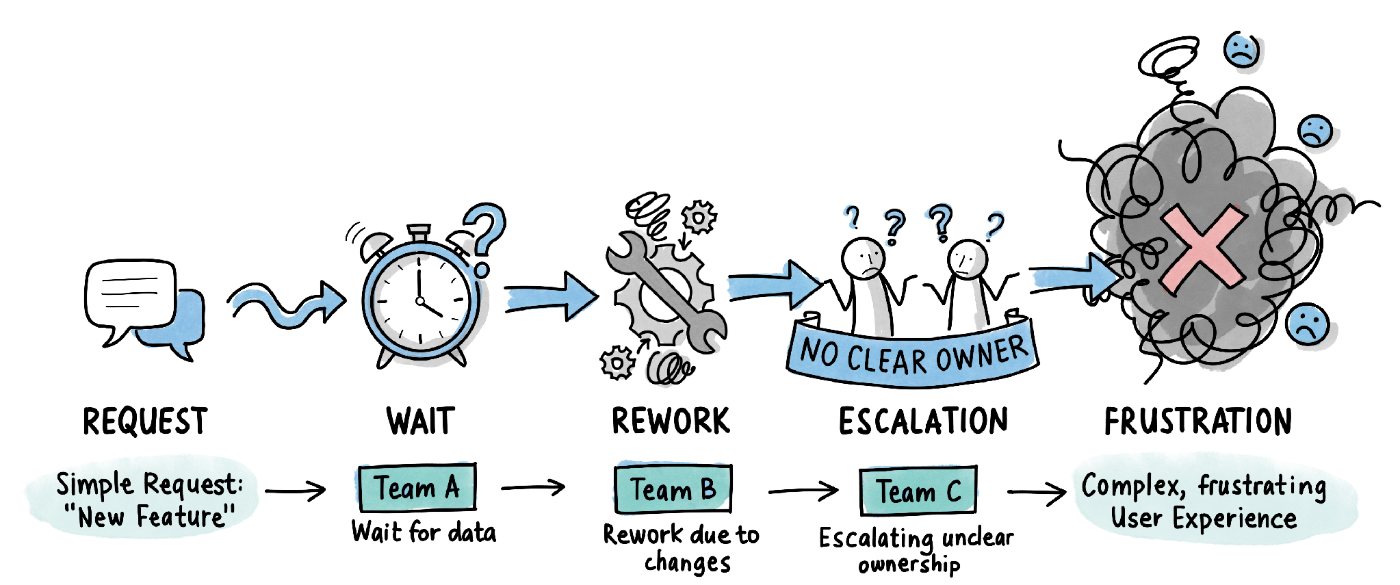
Inside a company we have polite words: dependencies, alignment, governance, complexity. Users just feel the handoffs, the waiting, the rework and the decisions nobody seems to own. Many of our users are colleagues: engineers, operators, traders, finance and HR. When their experience is fragmented, it's rarely because a team doesn't care. It's because the system around the teams creates fragmentation.
Ørsted built the world's first offshore wind farm in 1991 and now runs more than 1,800 turbines at sea. When growth was strong, slow decisions and unclear ownership could hide. Rising capital costs, supply-chain pressure and political uncertainty brought them to the surface. We thought it was a delivery problem. It was a design problem. This is a story from the middle of the journey, not a victory lap.
Key insights
Organization design isn't separate from product work
The way we group teams, define ownership, fund work and make decisions becomes part of the product interface.
Under pressure, the system reveals itself
If decision rights are unclear, teams wait. If dependencies are invisible, roadmaps become optimistic fiction. Pressure is uncomfortable, but it shows you what to fix.
Clarity comes from what you choose not to do
"Value over volume" changed the question from how do we do more to how do we choose better. The Decision Stack connects vision, strategy, objectives, opportunities and principles so teams can see the trade-offs.
Organize around value, not technology
Users don't experience your technology landscape, they experience their own journey. If you start with structure, you improve the boxes. If you start with value, you improve the journey.
Governance should be where learning changes decisions
Teams need clarity from leadership, and leadership needs reality from teams. If information only moves upward as status, governance becomes theater.
Product leadership is not just a role
We need a stronger decision system around product managers, not just stronger product managers carrying the weight alone. Autonomy needs clear boundaries, dependencies and decision rights.
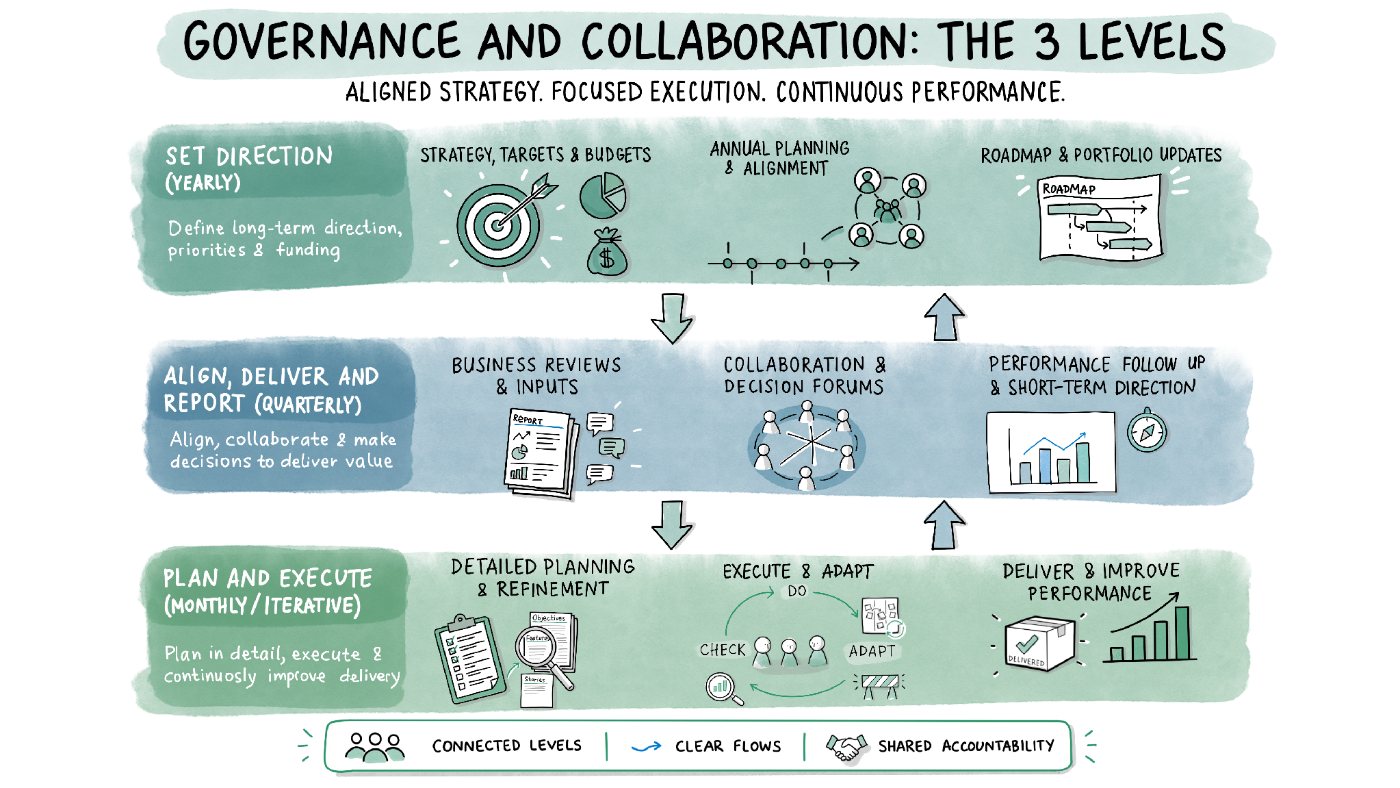
Governance and collaboration: three connected levels, with clarity flowing down and reality flowing up.
Questions to take back on Monday
- Where do our users feel the seams between our teams, and is that boundary there on purpose?
- Who actually holds decision rights for our top three priorities?
- Which of our roadmaps depend on teams that don't know they're on it?
- Does our governance create learning, or just reports?
- What have we explicitly decided not to do this year?
- Is our product manager carrying the weight alone, or is there a decision system around them?


